Understanding — How to Read Research
How to Read a Hemp Product Label and Certificate of Analysis
A product label and a certificate of analysis are different documents serving different purposes — understanding what each one tells you, and what each one cannot tell you, is the foundation of informed purchasing.
Understanding · How to Read Research
Hemp products arrive with two primary documentation sources: the label on the bottle and the certificate of analysis from an independent laboratory. Most buyers look at one or both without a clear framework for what to look for or what questions to ask. This article provides that framework.
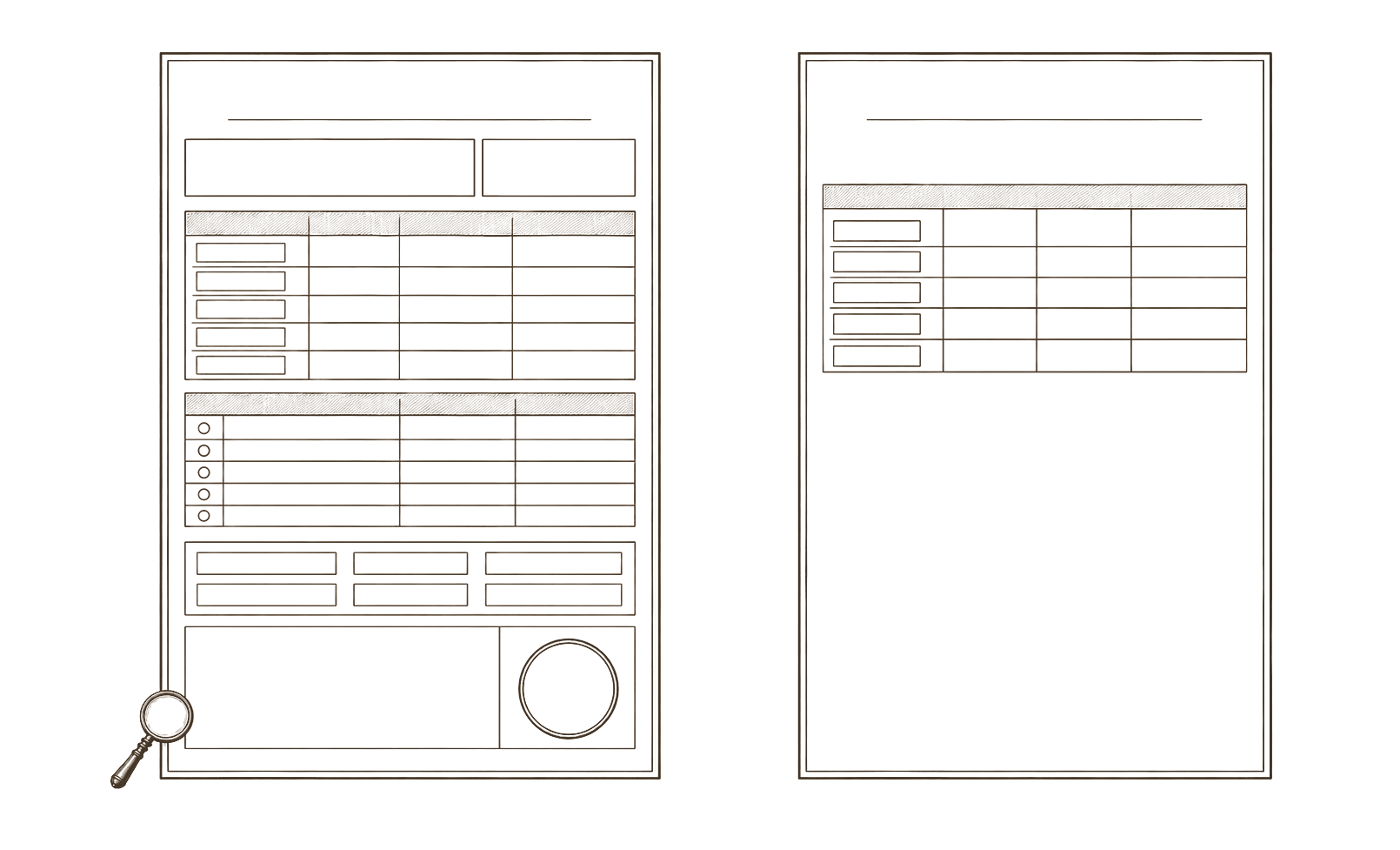
The label and the COA serve different functions. The label is a commercial document — it is required by law to contain certain information, and its language is governed by both regulatory requirements and marketing conventions. The COA is a scientific document — it reports what a laboratory measured in a specific batch of product. Neither is complete on its own. A label without a COA is an unverified claim. A COA without a label check leaves important context unknown.


Reading the Product Label
A hemp product label must by federal and most state regulations include the product name, net weight or volume, serving suggestion, a list of ingredients, the manufacturer's name and address, and a statement that the product has not been evaluated by the FDA and is not intended to diagnose, treat, cure, or prevent any disease. Beyond these requirements, labeling conventions vary considerably across the industry.
Cannabinoid Content Claims
The most important figure on a hemp label is the stated cannabinoid content — typically expressed as total milligrams per container and milligrams per serving. This figure is a claim, not a measurement. The label tells you what the manufacturer intends the product to contain. Whether the product actually contains that amount is what the COA exists to confirm.
A label stating "1000mg CBD per bottle" means the manufacturer is claiming that quantity. It does not mean 1000mg was measured and confirmed. That confirmation requires a COA showing the potency panel for that specific batch. If no COA is available, the milligram claim on the label is unverified.
Preparation Method Language
Labels often describe the preparation method — "full-spectrum," "broad-spectrum," "isolate," "tincture," "oil," "extract," "whole-plant." These terms have meaningful technical distinctions but are not legally defined in most jurisdictions. The same term can be used by different manufacturers to describe different things. The preparation method description on a label points you toward what to look for in the COA — a full-spectrum claim should show multiple cannabinoids on the potency panel, for instance — but the label description alone does not confirm the preparation type.
Ingredient Lists
The ingredient list tells you what else is in the product beyond cannabinoids. For a simple preparation, this list should be short — the hemp preparation itself and a carrier if applicable. Long ingredient lists with synthetic preservatives, flavouring agents, emulsifiers, or proprietary blends indicate a more processed product. Whether that matters depends on your preferences, but knowing what is and is not in the bottle is relevant to an informed decision.
Label Fields Reference
| Label Field | What It Tells You — and What to Watch For |
|---|---|
| Cannabinoid content (mg) | The manufacturer's claim — not a measurement. Requires COA to verify. Verify against COA potency panel |
| Serving suggestion | Not a dosing recommendation — a regulatory term. No therapeutic dose is implied or established by this figure. |
| Preparation type | Full-spectrum / broad-spectrum / isolate / tincture / oil — these terms are not legally defined. Check COA for actual cannabinoid profile. Cross-check with COA cannabinoid panel |
| Ingredient list | What is in the bottle. Short lists indicate less-processed preparations. Look for unexplained "proprietary blends." |
| Batch or lot number | Essential for matching the label to the correct COA. Without a batch number, you cannot confirm which test results correspond to the product you have. |
| Manufacturer name and address | Required. Its absence is a regulatory violation and a significant quality signal. |
| FDA disclaimer | Required by law for any hemp product making implied health-related statements. Its presence is a regulatory floor, not a quality indicator. |
| QR code or COA link | The presence of a link to batch-specific lab results is a positive quality signal. The absence of this link means you will need to request documentation manually. |
Reading the Certificate of Analysis
A certificate of analysis is a laboratory document reporting the measured composition of a specific production batch. It is produced by an independent testing laboratory that has no commercial interest in the results. The key word is independent — a COA produced by the manufacturer's own internal laboratory is not the same as one produced by an accredited third-party lab. Only third-party COAs provide meaningful independent verification.
The Potency Panel
The potency panel reports the measured cannabinoid concentrations in the batch. For a product claiming 1000mg CBD per 30ml bottle, the potency panel should show a CBD concentration consistent with that claim. Values are typically reported as a percentage by weight and as milligrams per millilitre or milligrams per gram, from which total milligram content per container can be calculated.
A complete potency panel reports multiple cannabinoids — not only the primary cannabinoid being marketed. For a full-spectrum preparation, the panel should show detectable amounts of minor cannabinoids alongside the primary. A panel reporting only a single cannabinoid from a product claiming to be full-spectrum is an inconsistency worth investigating.
Check whether the reported value for the primary cannabinoid is within a reasonable tolerance of the label claim — typically plus or minus ten percent is considered acceptable in the industry. Significant underdosing relative to the label claim is a quality concern. Significant overdosing raises a different concern — whether the product is consistently formulated.
THC Content
Hemp-derived products are legally required to contain less than 0.3 percent THC on a dry weight basis under the 2018 Farm Bill. The COA potency panel should confirm that total THC — the sum of delta-9-THC and the THC-A precursor converted to equivalent — falls below this threshold. A product without this confirmation on its COA carries regulatory uncertainty regardless of what the label states.
Safety Screening Panels
A complete COA includes results for contaminant screening alongside the potency panel. The most important panels to look for are heavy metals, pesticide residues, residual solvents, and microbial contamination.
Heavy metals — lead, arsenic, cadmium, mercury — are particularly relevant for hemp because hemp is a bioaccumulator. It draws compounds, including heavy metals, from the soil in which it grows. Hemp cultivated in contaminated soil can accumulate heavy metals at concentrations that present a health concern. Heavy metal testing is not optional information for a hemp product — it is a foundational safety requirement.
Pesticide residue testing confirms that the growing environment did not introduce agricultural chemical contamination into the plant material. Residual solvent testing is relevant for solvent-extracted products — confirming that processing solvents were adequately removed. Microbial testing screens for bacterial and fungal contamination that can occur during cultivation, processing, or storage.
A COA that shows only a potency panel and no safety screening is an incomplete document. It tells you what is in the product. It does not tell you whether what is in the product is safe. These are different questions.
COA Fields Reference
| COA Section | What to Look For |
|---|---|
| Laboratory name and accreditation | Third-party and ISO 17025 accredited or equivalent. In-house laboratory results from the manufacturer do not constitute independent verification. Third-party only — verify accreditation |
| Batch or lot number | Must match the batch number on the product label. A COA without a batch number, or one that does not match the label, cannot be confirmed to correspond to the product in hand. |
| Test date | COAs should be current to the production batch. A COA dated years before the product was purchased may not reflect the current lot. Check date matches batch production window |
| Potency panel — primary cannabinoid | Should be within approximately ±10% of the label claim. Significant deviation in either direction is a quality concern. |
| Potency panel — THC content | Total THC must be below 0.3% on a dry weight basis for legal hemp-derived products. The COA must confirm this. Required — not optional |
| Potency panel — minor cannabinoids | For full-spectrum products, minor cannabinoids should be detectable. A full-spectrum label with a panel showing only one cannabinoid is inconsistent. |
| Heavy metals panel | Should show lead, arsenic, cadmium, mercury results. Pass/fail against regulatory limits. Absence of this panel is a significant gap. Required for bioaccumulating crops |
| Pesticide residues | Particularly relevant for non-organically grown hemp. Pass/fail against regulatory limits. |
| Residual solvents | Relevant for solvent-extracted products. Less relevant for whole-plant alcohol tinctures and oil infusions where solvents are retained in controlled amounts as part of the preparation. |
| Microbial contamination | Total aerobic count, yeast and mould, specified pathogens. Pass/fail format. |
What Absence of Information Signals
In hemp product documentation, what is not present is often as informative as what is. Several common absences are worth understanding specifically.
No batch number on the label means there is no way to match the product to a specific COA. Any COA provided by a company that does not carry a batch number is effectively a general document — it may represent a prior production run, a different formulation, or a different product entirely. Batch-level documentation requires a batch number on the label.
No safety screening on the COA means the product has been tested for what it claims to contain but not for what it might contain as a result of the growing environment or processing. This is a meaningful gap, particularly for heavy metals in hemp grown in unknown soil conditions.
No third-party COA — only internal testing — means the entity responsible for the product's quality is also the entity certifying it. This is a structural conflict of interest, not necessarily evidence of a problem, but it removes the independent verification that makes COA documentation meaningful.
No COA available at all is the most significant absence. In the current hemp market, third-party batch testing is the primary mechanism through which product quality is documented. A company that does not provide COAs for its products is operating without the most basic form of batch-level quality transparency.
A complete COA from an accredited laboratory confirms the measured composition and contaminant screening results of the tested sample at the time of testing. It does not confirm that every bottle in the batch is identical to the tested sample — sampling methodology and batch homogeneity are separate questions. It does not confirm stability over shelf life unless specific stability testing was conducted. It does not confirm bioavailability, absorption, or clinical effect.
Documentation literacy is the foundation of informed hemp purchasing. It is not the ceiling. Understanding what a label claims and what a COA confirms is the starting point — evaluating whether those claims and confirmations are relevant to your situation requires the research literacy covered in the rest of this archive.
Further Reading
Research Literacy · Understanding — How to evaluate cannabinoid study design, sample size, and evidence level
Foundational · How Cannabinoids Work — What full-spectrum, broad-spectrum, and isolate actually mean
Foundational · How Cannabinoids Work — How administration route affects bioavailability and onset
Foundational · Hemp Plant — From field to finished preparation: the whole-plant process
These statements have not been evaluated by the Food and Drug Administration. J.P. Hemp Company products are not intended to diagnose, treat, cure, or prevent any disease.